The "Fleece & Carabiner" Trick: Improvised Pelvic Binders
A broken pelvis can hide liters of fatal internal bleeding. Learn how to "close the book" and save a life off-grid using just a fleece jacket and a climbing carabiner.
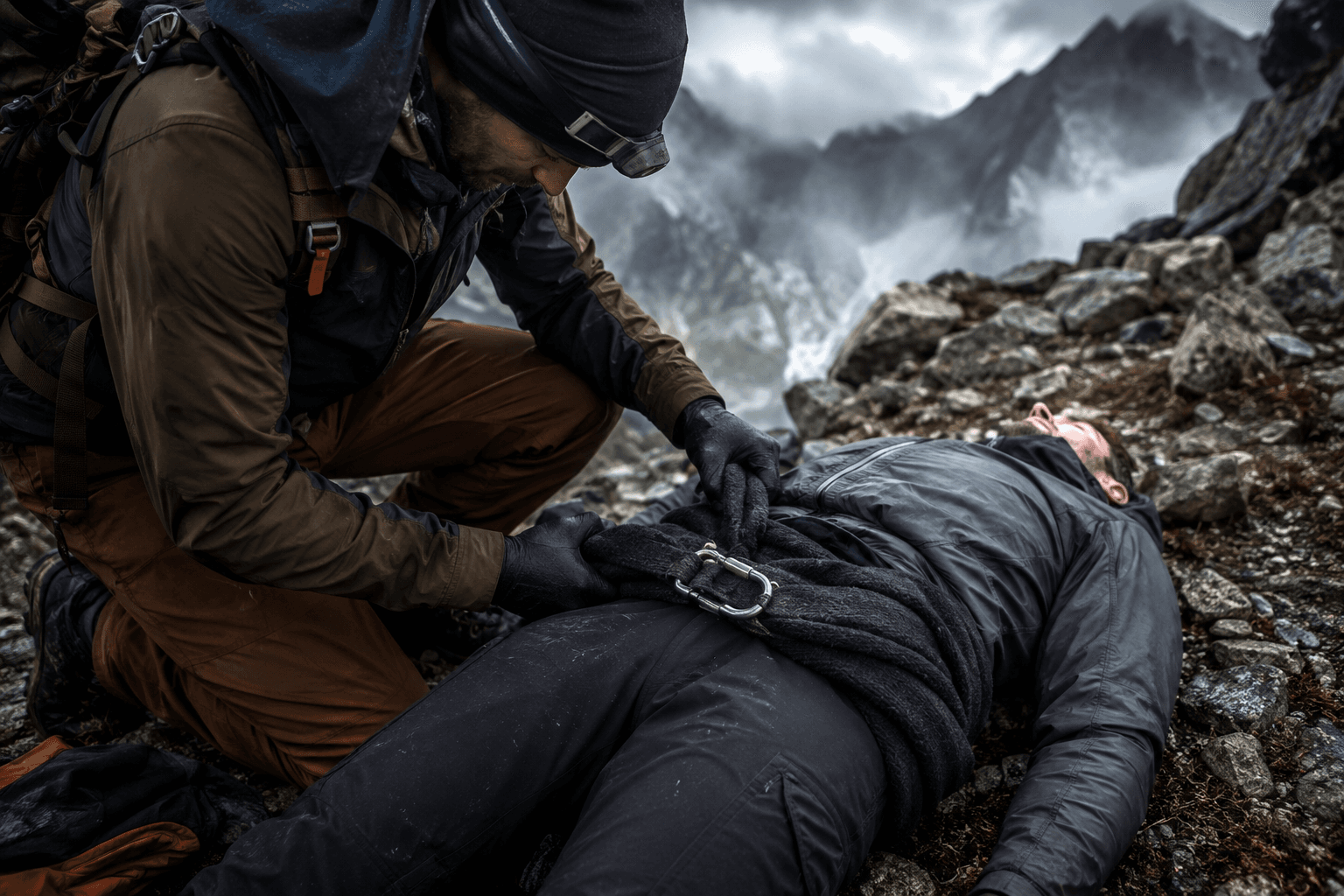
You respond to a climber who just took a 30-foot ground fall. You complete your MARCH-E primary survey. There is no visible blood. No arterial spurting. No amputations. Yet, the patient is pale, sweating profusely in the cold air, and their radial pulse is rapidly fading. They are dying right in front of you, and you can't see the leak.
Welcome to the terrifying reality of occult (hidden) hemorrhage. In high-velocity blunt trauma, the primary suspect is the pelvis.
The Anatomy of a Hidden Killer
The human pelvis is a highly vascular ring of bone protecting major blood vessels, including the iliac arteries. When a massive force strikes the pelvis, it can fracture and spring open—a catastrophic injury known clinically as an "Open Book" fracture.
"The retroperitoneal space inside a fractured pelvis can hold up to 2 to 3 liters of blood. A patient can literally bleed to death internally without a single drop of blood hitting the dirt." – Dr. Mouine Khalil Errahmane Ameur, Off-Grid Medical Care
In a trauma bay, this is stabilized with a commercial SAM Pelvic Sling and immediate surgery. In the backcountry, you must physically force the broken bones back together to reduce the internal volume and tamponade (compress) the bleeding vessels. If your medical kit doesn't have a commercial binder, your patient's life depends on your ability to improvise.
The MacGyver Protocol: The Fleece & Carabiner Windlass
To build an improvised pelvic binder, you need wide, strong material that won't cut into the skin (like a fleece jacket or a closed-cell foam sleeping pad) and a mechanical advantage system to pull it tight.
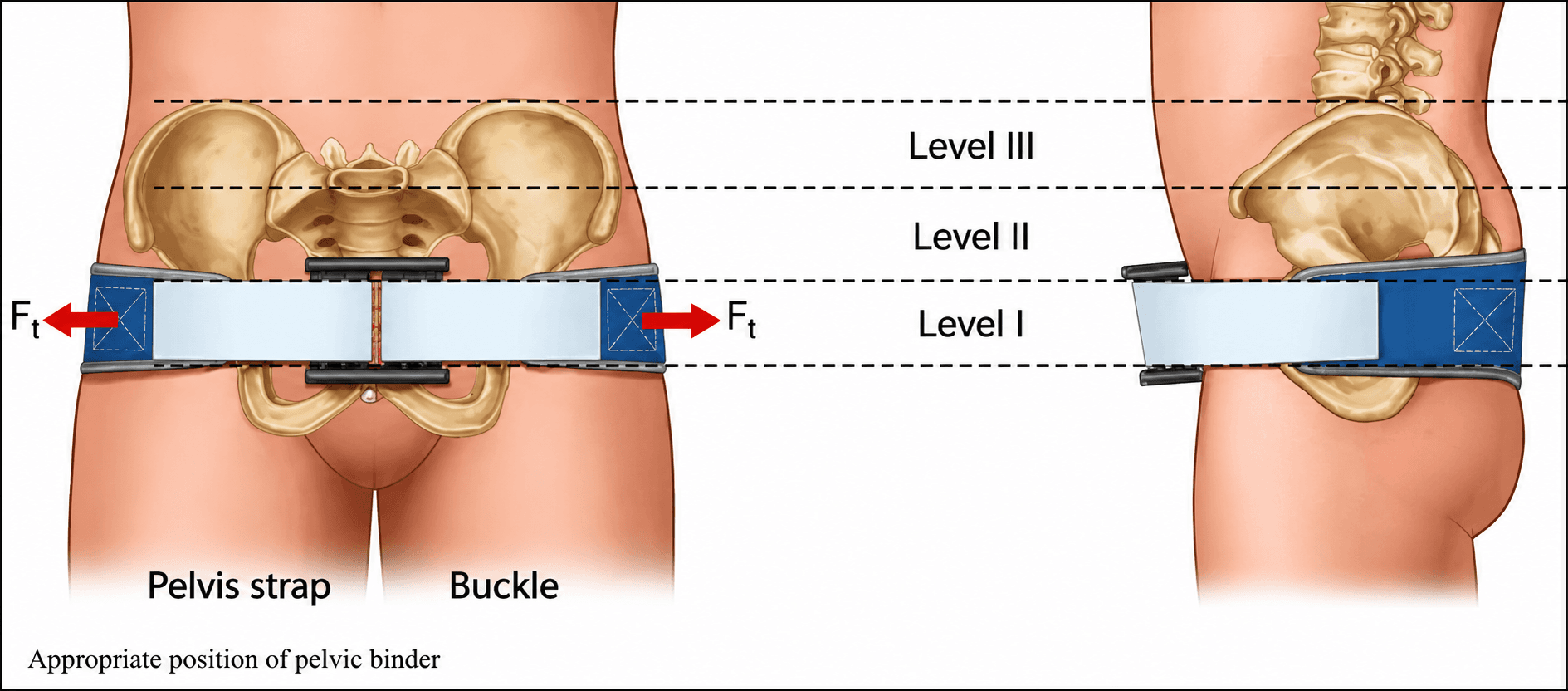
- Locate the Correct Anatomy: This is the most common fatal mistake. DO NOT place the binder over the soft abdomen or the iliac crests (the top hip bones). You must wrap it around the Greater Trochanters (the bony protrusions on the upper sides of the femurs, level with the pubic bone).
- Position the Material: Carefully slide a heavy fleece jacket, folded blanket, or sleeping pad directly underneath the patient's greater trochanters without rolling them excessively.
- Create the Windlass: Bring the sleeves of the jacket (or straps of webbing) around to the front.
- Apply Mechanical Advantage: Attach a climbing carabiner to one sleeve. Feed the other sleeve through the carabiner, pull it back on itself (like a trucker's hitch), and pull with overwhelming force.
- Secure the Binder: Tie it off securely. You should feel the pelvis physically close.
Critical Safety Filters
Once applied, never remove a pelvic binder in the field. If you release that pressure, the fragile blood clots that formed inside the pelvis will instantly rupture, and the patient will exsanguinate in minutes. Check the feet for distal pulses and load the patient for a rapid, gentle evacuation.
In the wilderness, standard medical logistics fail. You must manipulate anatomy and physics to save lives. Discover exactly how to improvise traction splints, chest seals, and hypothermia wraps in the definitive 410-page survival manual: Off-Grid Medical Care.